ENGLISH BELOW
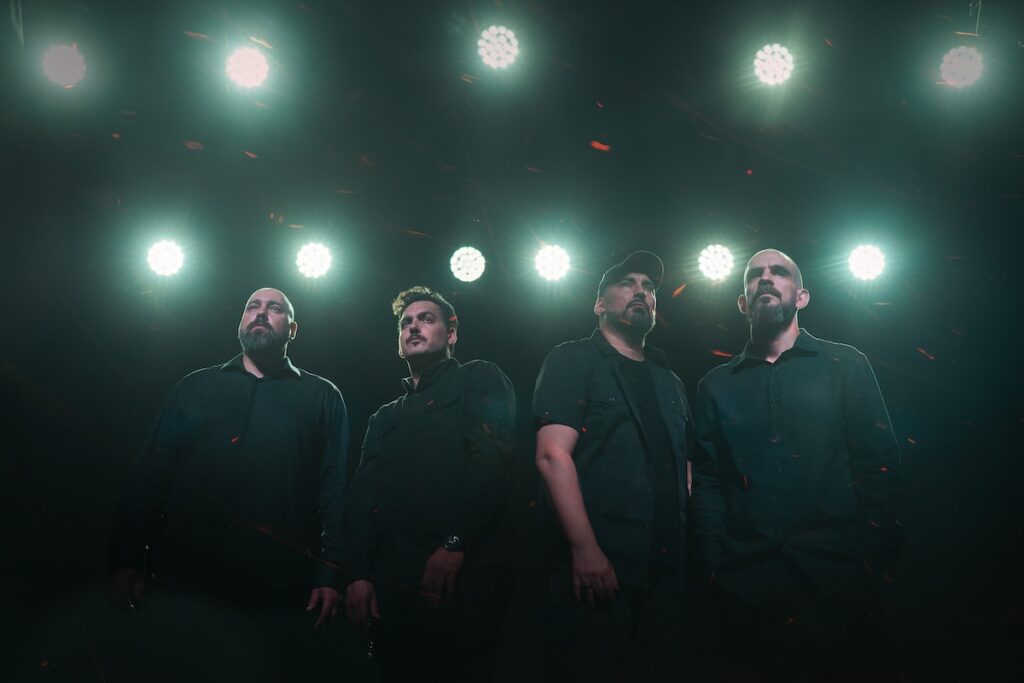
„Mnohé kapely sú dnes v prvom rade tvorcami obsahu, nie skutočnými umelcami – my chceme skrátka tvoriť hudbu.“ V dobe, ktorej vládne krátka pozornosť a algoritmy, si gitarista skupiny Mother of Millions Kostas Konstantinidis pevne stojí za svojim umeleckým prístupom. Kapela spája tvrdý prog s filmovou tragédiou a starovekými gréckymi mýtickými archetypmi, čím vytvára pohlcujúce kreácie zamýšľané ako spoločný živý rituál. Kostas sa otvorene rozpráva o novom minimalistickom albume T, temných náhodách aj o tom, prečo im odmietanie žánrových nálepiek dáva absolútnu slobodu.

Ahoj Kostas. Vlastne som sa o vašej kapele dozvedela len nedávno, je to pre mňa celkom čerstvá vec, no váš zvuk som si hneď zamilovala. Čím je výnimočný? Prečo sú všetky tie grécke kapely také osobité? Čo robíte? Čo pijete?
Neviem, či je to tým, aké ťažké je žiť v Grécku – a teraz nemyslím byť v Grécku turistom. Keď si turista, všetko je krásne. Ale keď tu žijete, niektoré veci sú dosť zlé. Takže si myslím, že… Ťažké situácie sú vždy inšpiráciou. Ale neviem. Je to už 15 rokov, čo tu v Grécku nastal reštart scény. A jedno viedlo k druhému. Poznáme tu každého, kto hrá hudbu, tak sa snažíme si navzájom pomáhať.
Jasné, to je naozaj pekné a vlastne veľmi dobré. Keďže sa rozprávame prvýkrát, rada by som sa, samozrejme, pozrela trochu aj na históriu kapely. A najmä na váš názov. Kto je teda tá „Matka miliónov“? Je to planéta Zem? Lebo to bola moja prvá myšlienka. Technicky vzaté je to totiž naša matka.
Áno, je to otvorené interpretácii. Ale v skutočnosti je to kvetina. Ľudový názov rastliny, myslím, že pochádza z Madagaskaru. Má tú vlastnosť, že sa rozmnožuje veľmi, veľmi rýchlo a zároveň je toxická pre dobytok. Keď si teda vezmeme tieto vlastnosti – rýchle rozmnožovanie a toxicitu – a prenesieme ich do sveta myšlienok, získame myšlienku, ktorá by mohla byť toxická pre to, čo sme poznali doteraz. A toxická v dobrom zmysle, pretože si zvykáme na tento svet ako na niečo naozaj, naozaj zlé. Vytvárame si okolo seba ochrannú bublinu a všetko ostatné považujeme za toxické. A nemyslím si, že je to užitočné. Ľudia by mali nechať trochu toxicity, aby ich zmenila a posunula vo vývoji ďalej. Aby sa pozerali dopredu, nie len na prítomnosť. A to je hlavná myšlienka – že myšlienka sa dokáže rýchlo rozmnožiť, byť toxická a šíriť sa.
To znie naozaj zaujímavo. Aby som bola úplne úprimná, niečo takéto som vôbec nečakala. Ale povedala by som, že v tom je práve sila hudby. Veci síce môžu mať svoje vysvetlenie a svoj dôvod, no všetci dokážeme umenie vnímať z rôznych perspektív. Vadí vám, alebo vám nevadí, ak majú vaši fanúšikovia a poslucháči iné pocity v porovnaní s tým, čo ste chceli odovzdať vy?
Nie, pretože to sa v skutočnosti nestáva. Myslím si, že človek by síce mohol zle pochopiť text, ale tá základná emócia je veľmi podobná tej, ktorú sme mali my pri písaní skladby alebo albumu. Takže zdieľame emóciu, a to je pre nás to podstatné.
Nielen metalové kapely, ale všeobecne grécke umenie je tak trochu prepojené s dávnou históriou, poznáš to – s mytológiou, mysticizmom a všetkými tými vecami, samozrejme vrátane bohov. No vaše texty a atmosféra, ktorú z vašej hudby cítim, sú iné. Vnímam v nich a tak trochu chápem akúsi politickú, spoločenskú a modernú realitu. Mám pravdu, alebo sa opäť mýlim?
Snažíme sa tie svety spájať. Texty píšem väčšinou ja a hlboko sa inšpirujem mýtickým pôvodom určitých významov. Myslím si totiž, že mytológia v starovekom Grécku a vo všetkých civilizáciách nebola len o rozprávaní strašidelných príbehov s príšerami a o hrdinskej ceste domov za záchranou princeznej. Je to cesta duše. Sú to ich počiatky psychoanalýzy – takto sa na mytológiu pozerám ja. V našich textoch majú mýtické koncepty vždy svoje špeciálne miesto. Tentoraz sme sa rozhodli hovoriť o vojne, no nie len o moderných situáciách, ktoré prežívame dnes. O vojne ako o nadčasovej záležitosti, ako o ľudskom prekliatí, ktoré trvá od staroveku až dodnes. A symbol T z nášho albumu znázorňuje křižovatku. Je to moment, v ktorom sa ľudia musia rozhodnúť, či chcú pokračovať v tom, čo bolo predtým, alebo sa chcú posunúť a vyvíjať.
Prečo tá jednoduchosť v názve albumu – T?
Vnímali sme ho ako symbol, ako križovatku. To je jedna časť významu. Tou druhou je, že sme na tomto albume použili zbor a aj ďalšie prvky, ktoré pripomínajú hudobné časti tragédie. Tragédie, ktorou je vojna. Je to teda tragédia, ktorá sa začína na písmeno T. Je to trauma, ktorá sa začína na písmeno T. A je to symbol písmena, ktoré znázorňuje križovatku. To je myšlienka za názvom albumu. Taktiež máme radi minimalizmus. Neradi veci prekombinovane popisujeme, takže toto je ten najminimalistickejší názov, aký sme kedy vytvorili.
A toto som si jednoznačne všimla tiež. Dĺžka názvov – všetky názvy skladieb sú v podstate vždy jedno, maximálne dve slová. O novom albume budeme, samozrejme, hovoriť aj ďalej. A možno budem teraz znieť smiešne, ale všimli ste si, že album vychádza presne v deň 25. výročia teroristického útoku v New Yorku?
Áno, všimli sme si to. Myslím si však, že je to len temná náhoda.
Takže to nebol zámer?
Nie, nie, nie, nie, nie. Tieto dátumy sú len chladná logistika. Nemajú žiadny hlbší význam. Rozhodlo sa o tom mesiace dopredu, takže to nebola naša voľba. A nemyslím si, že by aj vydavateľstvu zišlo na um spájať takéto hrozné výročie s albumom o vojne.
Mne sa naozaj veľmi páči nový singel s názvom The Wound.
Ďakujem.
A čo ma možno prekvapilo úplne najviac, boli texty. Vo väčšine prípadov, keď čítate alebo počúvate texty o vojne, o všetkých tých úmrtiach, tragédiách a podobne, je to akosi metaforické, skryté medzi riadkami. No toto sú texty o ranách, veľmi priame. Prečo?
V skutočnosti je to časť básne s názvom The Wound Dresser (Ošetrovateľ rán) od Walta Whitmana. Walt Whitman je jeden z najväčších amerických básnikov 19. storočia a v tejto básni píše o svojich skúsenostiach z nemocníc. Počas americkej občianskej vojny pracoval ako dobrovoľný zdravotný brat. A všetci vieme, že v 19. storočí nebola západná medicína taká pokročilá, takže videl množstvo veľmi zlých vecí a napísal o tom. Podľa mňa však poézia nemá vždy len prvú rovninu interpretácie. Vždy má skryté významy v druhej či tretej vrstve, do ktorých si môžete premietnuť vlastné myšlienky. Keď sme teda zbierali texty – robíme to pri každom albume, zbierame texty, básne, úryvky z literatúry a podobne, aby sme si vytvorili rámec, v ktorom sa budeme hýbať. Robili sme to aj pri albume T. Báseň The Wound Dresser bola jednou z prvých, na ktoré som pri tejto práci narazil. Narazil som na časť, ktorú sme použili ako refrén: „I am faithful, I do not give out“ („Som verný, nevzdávam sa“). V hlave mi to rozsvietilo množstvo kontroliek – že nehovorí len o svojej tamojšej skúsenosti, nehovorí len o tom, že musí mať pevnú ruku a starať sa o ranených. Je to o človeku, ktorý vracia niečo ľudstvu a presahuje sám seba. A keďže to má zároveň silný dopad v podobe fyzických následkov vojny – doslova ranených -, pomyslel som si, že by bolo skvelé túto časť básne použiť ako text prvej skladby albumu, ako taký úvod. Takže áno, je to pomerne doslovné, no v mojej mysli zároveň až tak nie.
Počúvala som, samozrejme, aj vašu staršiu tvorbu a zdá sa mi, že ste zvuk posunuli o niečo vpred, trochu iným smerom. Bol to opäť zámer?
Nebol v tom zámer, ale vnímam to aj ja, že sa ten zvuk trochu posunul. Myslím si, že je to tým, že pri predchádzajúcom albume Magna Mater sme už pred samotnou produkciou vedeli, ako bude finálny zvuk vyzerať. Skladali sme pesničky, mali sme pripravené štyri veci, spravili sme predprodukciu a mali sme jasnú predstavu o výsledku. Na Magna Mater je tá produkcia ucelená od začiatku do konca. No pri tomto albume sme vôbec netušili, ako bude produkcia vo finále znieť. Jednoducho sme len písali skladby a ja sám som počas tvorby nevidel konečný výsledok. Takže si myslím, že časť vysvetlenia je práve v tom, že sme pri komponovaní nemali v hlave žiadnu vopred danú predstavu.
Jednou z vecí, ktoré ma tiež zaujali, bol vizuál albumu, artwork. Na jednej strane je myslím celkom jasné, čo má znázorňovať alebo ukazovať, keďže sú tam roztrhané vlajky. No na druhej strane, keď uvážim, akou ťažkou témou sa zaoberáte, pôsobí to na mňa akosi pokojne. Jednoducho, ale tak trochu mierumilovne. Ako je to možné? Všeobecne myslím celú vašu umeleckú tvorbu – riešite v nej nesmierne pálčivé a zraňujúce témy, no zároveň z nej nemám taký ten negatívny pocit.
To je veľmi pekný postreh. Pri debate o vizuále tohto albumu sme boli traja. Ja, môj partner z mojej druhej kreatívnej práce – venujeme sa tvorbe videí, dizajnu a podobne – a tretí kolega, ktorý vytvoril 3D modely a celý 3D priestor. Hlavná debata bola o tom „dni potom“, o následkoch a o pohľade dopredu. Je to, akoby tie vlajky boli niečo z minulosti, od čoho sa ľudstvo už posunulo ďalej, a nezostali žiadne ďalšie hranice ani iné veci, ktoré by nás rozdeľovali. A pozeráme sa dopredu na nové slnko, na niečo nepreskúmané. Myslím si, že práve preto to pôsobí tak pokojne. No v našom ostatnom umení je vždy náznak, že sa tam niečo deje. Pri Magna Mater, ak sa pozrieš pozorne do očí tej herečky na obale, niečo sa tam odohráva. Pôsobí to pokojne, no niečo sa tam deje.
A vlastne si o tom už aj sám začal hovoriť. Povedala by som, že – a obzvlášť dnes, keď je všetko digitálne a online a ľudia sa už fyzických objektov spojených s umením až tak nedotýkajú – je to na jednej strane možno pozitívne, no na druhej ani veľmi nie, naozaj záleží na uhle pohľadu. Povedala by som však, že v umení, a predovšetkým v hudbe – špeciálne v metale a rocku, hrá tá vizuálna stránka obrovskú rolu. Ako veľmi je prepojená s vašou hudbou?
Vizuálna stránka? Nuž, tá je prepojená vždy. Lebo keď ja ako fanúšik a poslucháč premýšľam o nejakom albume, v mysli sa mi vybaví jeho obal. Znie mi v hlave hudba a vidím pred sebou ten obal. Takže to spolu veľmi úzko súvisí. Mám však aj 40 rokov, takže som vyrastal na CD-čkách a vinyloch a hudbu som vždy držal v rukách, listoval v bookletových stranách, učil sa texty a spieval si s kapelou. Nemôžem teda hovoriť za mladšie generácie. No tie mladé tváre, ktoré vidím v našom publiku, prežívajú niečo podobné. Neviem však, či je to tým, že ide o metalovú komunitu, že títo ľudia majú svoje tradície. Je to subkultúra a tá má svoje zvyky. Súčasťou tradície je, že ten album jednoducho musíš držať v ruke. Musíte si potriasť rukou s členom kapely, získať jeho podpis, stáť v prvej rade a mať z toho modriny na chrbte a podobne. To všetko patrí k tradícii.
Takže si myslíš, že mladšia generácia o to možno prichádza, alebo že hudbu neprežíva tak, ako sme boli zvyknutí my?
Áno, je to tou pozornosťou – respektíve tým, ako rýchlo ju strácame. A tým, čo do hudby priniesol TikTok. Že všetko musí mať nejaký chytľavý moment, všetko musí zaujať počas prvých desiatich, alebo ja neviem, troch sekúnd. Nemyslím si však, že toto je v skutočnosti základný prvok ľudskej prirodzenosti. Podľa mňa žijeme v dobe, ktorá je niekde medzi. Sme súčasťou prechodu a nevieme, kde to napokon skončí a kam nás vývoj zavedie. Neverím, že človek má od prírody krátku schopnosť udržať pozornosť, je to skrátka charakteristika tejto doby. Nedávno som čítal naozaj zaujímavú knihu o rituáloch a o tom, ako dnešný človek zo svojho života rituály vytráca. A pritom hudba je rituál. Hudba je prepojenie na každom koncerte, obzvlášť na tých metalových, kde sa ľudia spoja, zdvihnú päsť a spievajú z plných pľúc. A myslím si, že toto je časť rituálu, časť tej širšej ľudskej skúsenosti. Nemôžeme to dehonestovať a spraviť z toho len súčasť nejakej kampane s chytľavým refrénom alebo rytmickú tiktokovú odrhovačku, ktorá nám znie v hlave týždeň a ďalší týždeň na ňu zabudneme. Žijeme v dobe, kedy je ťažké sústrediť sa na jednu vec. Musím povedať, že pre albumy je to náročná doba. Ale nemyslím si, že by nás to až tak trápilo. Nikdy nám nezáležalo na dosahoch našej hudby. Boli by sme veľmi šťastní, kedy bol ten dosah širší, no nerobíme to kvôli tomu. Robíme to pre naše duše, robíme to pre seba. A chceme slúžiť niečomu väčšiemu – veľkému rituálu, ktorým sú naše živé vystúpenia. Chceme vidieť tie emócie, ktoré sa tam tvoria, väčšinou ako taká para – doslova ich vidíš vo vzduchu. A každú noc splynieme s ľuďmi v jedno. Práve preto to robíme. Nerobíme to pre čísla a dosahy, tie sú nám fakt ukradnuté. Dnes je morom to, že mnohé kapely sú v prvom rade tvorcami obsahu, nie skutočnými umelcami. Ale no tak, chlapci, jednoducho robte hudbu.
Presne tak. A to ani nehovorím o tom, ako dokáže hudbu generovať umelá inteligencia, čo je šialené. Necháp ma zle, myslím si, že AI môže byť vo všetkom tomto naozaj užitočná, vidím v nej prínos, ale nie v umení. Rada čítam komentáre pod videami a podobne. Je pre mňa dosť zaujímavé vedieť, čo si poslucháči myslia o najnovších singloch a tak. A pod tým najnovším singlom sú fakt, fakt, fakt super podporujúce komentáre, čo sa počúva aj vidí veľmi dobre. Je tu však jeden komentár, ktorý by som vyzdvihla a spýtala sa, aký je tvoj názor. Jeden chlapík vás označil – myslím tým ten žáner metalu, rozhodol sa vás nazvať „inteligentná metalová hudba“ alebo „inteligentný metal“. Čo si o tom myslíš?
Počuli sme už mnoho, mnoho ďalších nálepiek, ako napríklad art metal, art prog, kinematografický či atmosférický metal. Ja nálepkám v skutočnosti veľmi neverím. Keď sme začali písať hudbu, vybrali sme si nálepku „prog“, pretože tá vám dáva najväčšiu umeleckú slobodu. A my nechceme hranice. Ak by sme sa rozhodli byť, povedzme, tradičnou heavy metalovou alebo thrash metalovou kapelou, ľudia by sa urazili, ak by ste spravili niečo iné. Je to historicky dokázané. Ľudia by sa urazili. A my tu nálepku nechceme. Chceme si len užívať hudbu. Užívame si tú cestu. Vždy píšeme hudbu, ktorú by sme si sami radi vypočuli. Hranice a nálepky sú teda pre nás neužitočné. Verím, že sú mimoriadne potrebné, keď sa snažíte hudbu sprostredkovať navonok, keď píšeš do časopisu a chceš čitateľom priblížiť, kam táto kapela patrí a čo by mali čakať, keď si takúto kapelu vypočujú. Pri samotnej tvorbe to však užitočné nie je. Je to obmedzenie, ktoré nechceme.
V septembri prichádzate hrať k nám na Slovensko. Bude to vaša premiéra?
Nie, v skutočnosti sme tu po prvýkrát hrali minulý rok. Nepamätám si názov toho klubu, bolo to na lodi. Tento rok hráme v Randal Clube spolu s Oddland a Ring of Gyges. A dúfame, že sa tam uvidíme.
Veľmi pekne ti ďakujem za tvoj čas. S novým albumom prajem všetko dobré.
Ďakujem.
“We Do This for Our Souls”: Kostas Konstantinidis on War, Myth, and the Ritual of MOTHER OF MILLIONS
„Many bands these days are mostly content creators, not actual creators – we just want to write the music.“ In an era dominated by short attention spans and viral algorithms, Mother of Millions guitarist Kostas Konstantinidis stands firmly by a different artistic ethos. Blending heavy prog with cinematic tragedy and ancient Greek mythological archetypes, the band crafts immersive soundscapes meant to be experienced as a shared live ritual. Kostas opens up about the band’s minimal new record T, dark coincidences, and why rejecting subgenre labels gives them ultimate freedom.

Hi Kostas. I actually got to know about your band not so long ago, just basically pretty fresh for me, but I fell in love with your sound. What makes it special? Why are all those Greek bands so special? What do you guys do? What do you guys drink?
I don’t know if it’s the toughness to live in Greece, and I don’t mean to be a tourist in Greece. When you’re a tourist, everything is beautiful. But when you live here, some things are pretty bad. So I don’t think that’s… That’s always an inspiration, tough situations. But I don’t know. It’s been 15 years since there was a revival in the scene here in Greece. And one thing led to another. And we know everybody here who plays music. So we try to help each other.
Yeah, which is really nice, which is really good, actually. Since this is my first time talking to you, of course, I would like to have a look at your history of the band, I mean, a little bit. And especially the name of the band. So who is the mother of millions? Is it Planet Earth? Because actually, that was my first idea. Because she is, technically speaking, our mother.
Yeah, it’s open to interpretation. But it’s actually a flower. The popular name of a flower, I think it’s indigenous to Madagascar. And it has the quality to reproduce very, very quickly. And at the same time, it’s toxic to livestock. So if we take this quality, these qualities, the quick reproduction and the toxicity, and put them in the world of ideas, we have an idea that could be toxic to what we know up until today. And toxic in a good way, because we’re getting used to this world as something really, really bad. That we put a sphere of protection around us and everything else is toxic. And I don’t think that’s useful. People should let a bit of toxicity change them, to make them evolve. And make them look forward, not just in the present. And that’s the main idea. That an idea could quickly reproduce and be toxic and spread.
Wow, actually sounds quite interesting. I didn’t expect anything like that, to be completely honest with you. But I would say that that’s the power of music. Basically, things might have an explanation and might have their reason. But we all can see art from a different perspective. Do you mind or don’t you mind if your fans, if your listeners might have different feelings in comparison to what you wanted to share?
No, because that doesn’t really happen. And I think that one could have misunderstood the lyrics. But the core emotion is very similar to what we had when we wrote the track or the album. So we share an emotion and that’s the important thing to us.
Not only metal bands, but generally speaking, Greek art is kind of connected to the ancient, you know, the mythology, the mysticism and all of these things, the gods, obviously. But your lyrics and the vibe I get from listening to your music is different. I can see, I can kind of understand or comprehend some kind of a, you know, political, social, modern realia. Am I right or, again, wrong?
No, we try to combine the worlds. I write the lyrics most of the time and I am deeply inspired by the mythical origin, the mythical origin of some meanings. Because I think that mythology in ancient Greece and in all civilizations wasn’t just about describing scary stories with monsters and a hero’s arc that gets home and saves the princess. But it’s a journey of the soul. It’s their beginning of psychoanalysis. That’s my view of mythology. And there’s always a special place of mythical notions in our lyrics. This time we chose to talk about war, but not just the modern situations we experience. The war as a timeless thing, as a human curse that lives from the ancient times up until today. And the album, the symbol T is a crossroad. It’s the moment in which people have to decide if they want to continue the previous situation or do they want to evolve?
Why the simplicity of the title of the album?
We viewed it as a symbol, as a crossroad. That’s the one part of the meaning. And the other is that we used a choir in this album and some other elements that resemble the musical parts of a tragedy. A tragedy which is war. So it’s a tragedy which begins with the letter T. It’s a trauma which begins with the letter T. And it’s the symbol of the letter that is a crossroad. That’s the idea behind the album title. We also like being minimal. We don’t like over describing stuff. So this is the most minimal title we’ve ever produced.
And this is what I have definitely noticed. The length of the names, all the titles of the songs are basically always one or max., two words. Of course, we are going to keep on speaking about the new album. And maybe I will sound ridiculous, but have you noticed that it’s going to be released exactly on the 25th anniversary of the terrorist attack in New York City?
Yeah, we have noticed. But I think it’s a dark coincidence.
So this was not intentional?
No, no, no, no, no. These dates are just cold and logistical. They don’t have meaning. This was decided months before. So this wasn’t our choice. I don’t think it was the label’s thought as well that we should match a horrible anniversary with an album about war.
I actually really like the new single called The Wound.
Thank you.
And what maybe I can even say surprised me the most are the lyrics. Because in most of the cases, while reading or listening to the lyrics about war, all of the deaths and tragedies and you name it, it’s somehow metaphorical, hidden in between the lines. But this is like straight to your face lyrics about the wounds. And why?
It’s actually part of a poem named The Wound Dresser by Walt Whitman. Walt Whitman is one of the greatest American poets of the 19th century. And he writes in this poem about his experiences in hospitals. He was a volunteer nurse in the American Civil War. And we all know that in the 19th century, Western medicine wasn’t so advanced. So he saw many, many bad things. And he wrote about it. But poetry, in my mind, doesn’t always have the first level of interpretation. It always has hidden meanings in the second or third layers. You could project your own thoughts on the meanings. So when I read, we were collecting texts. We do this in every album. We collect texts and poems and excerpts of literature and stuff like that. And we try to create the frame in which we’re going to move in every album. We did this in T as well. So The Wound Dresser was one of the first poems I ran into when I was doing this work. And I came across the part we used as a chorus. I am faithful, I do not give out. And it rang many bells in my mind that he is not just talking about his experience there. He’s not just talking about it, I need to have steady hands and care about the wounded. It’s about a person giving back to humanity and being bigger than oneself. And I thought that also because it has a big impact with the physical consequences of war, literally the wounded, I thought that it would be really nice to actually use lyrically this part of the poem and use it as the first song of the album, as an intro song of the album. So yeah, it is quite literal, but at the same time, not as much in my mind.
I was listening to some previous work of yours as well, of course, and it seems to me like you pushed the sound a bit forward, somewhere slightly else. Was it again an intention?
Yeah, there wasn’t the intention, but I hear that as well, that the sound moved a bit. And I think it’s because in Magna Mater, a previous album, we knew how the production was going to sound like before the production. And we were creating some songs, we had four songs ready and we did pre-productions and we knew how the final production was going to sound like. It’s in Magna Mater, there’s a coherent production from the beginning to the end. And in this album, we didn’t know at all how the production was going to sound like. We just kept writing the songs and I didn’t know how it was finally going to sound like when we were writing. And so I think part of the explanation is that we didn’t have anything in mind when we were writing.
One of the things that I also had a look at was the artwork of the album. And on one hand, well, I think it’s quite clear what it is supposed to show or display or showcase because of the flags that are torn apart. But on the other hand, judging by how difficult the topic or the issue you’re dealing with is, it kind of feels peaceful to me. Simple, but sort of peaceful. How is it possible? Generally speaking, I mean, the entire art of yours, you have been dealing with really incredibly harmful things at the same time, but it kind of doesn’t have the vibe like that for me.
That’s a very nice observation. The main goal, we were three people to discuss the artwork in this album. Me and my partner from my other creative job, we create videos and design and stuff like that. And there was a third partner that created the 3D models and 3D space. The main talk was about the next day, the aftermath, and looking forward. And it’s like the flags are something of the past that humanity has now moved from. And there are no more borders and other stuff to divide us. And we look forward to it. We look to a new sun, to something unexplored. I think that’s why it seems peaceful. But in other art, there is always a hint that something is going on. In Magna Mater, if you closely look at her eyes, the actor’s eyes in the cover, there is something going on there. It seems peaceful, but there’s something going on.
And you basically kind of started talking about it. I would say that, and especially nowadays, because everything’s digital and everything’s online and people basically just don’t touch physical objects when it comes to art that much any longer. On the one hand, it may be positive. On the other hand, not necessarily, but it really depends on the point of view. But I would say that in art and especially in music, and especially in metal music or rock and metal music, it’s absolutely the visual side that plays a huge role. How closely is this tied to your music?
The visual aspect? Well, it always is. Because when I, as a fan, as a listener, when I think of an album, I think of its cover. There’s music humming inside my mind and I think of its cover. So it’s very related. But I’m also 40 years old, so I grew up with CDs and vinyls and I was always holding the music in my hands and telling the pages of a booklet and trying to learn the lyrics and sing along and stuff like that. So I can’t speak for the newer generations. The young faces that I see in our audience are having a similar experience. But I don’t know if that’s because this is the metal community, that people have traditions. It’s a subculture and it has traditions. Part of the tradition is that you have to hold the album. You have to shake the hand of a band member. You have to get his signature. You have to be on the front row and have bruises on your back and stuff like that. They’re part of the tradition.
So you think that the younger generation might miss it or might not experience the music in the same way like we used to?
Yeah, it’s the attention span thing. And the TikTok, what TikTok has brought to music. That everything needs to have a hook. Everything needs to be interesting the first 10 seconds or 3 seconds, I don’t know. I don’t believe, though, that this is actually an element, a core element of human nature. I think this is an age which is in between. We’re part of a transition. We don’t know where it’s going to land, where evolution is going to take us. I don’t believe that a human inherently has a short attention span. It’s the age thing. And I was actually reading a really interesting book about rituals and how rituals are not part of the human experience in this day and age. And music is a ritual. Music is a connection in every show, especially metal shows, in which people come together and raise their fists and sing as loud as they can. And I think this is part of a ritual. It’s part of the larger human experience. And we cannot lessen that and make this part of a hook campaign or a percussive TikTok song that rolls around our minds for this week and we forget about it the next week. It’s an age where it’s difficult to keep concentrated on one thing. It’s a difficult age for an album, I must say. But I don’t think we care that much. We didn’t ever care about the reach of our music. We would be very happy if the reach was wider. But we don’t do this. We do this for our souls. We do this for ourselves. And we’d like to serve in a big ritual, which is our live shows. We’d like to serve and see the emotion created, most of the time, like vapor. You can see it in the air. And we become one with the people every night. And that’s why we do it. We don’t do it for the reach. We don’t really care about the reach. It’s a plague these days that many bands are mostly content creators and not actual creators. And come on, man. Write the music.
Exactly, exactly. Not even talking about how the AI can generate music, which is crazy. Don’t take me wrong. I think AI can be really useful in all this. I see the benefits, but not in art. Come on. Usually, or always, I cannot say always, but usually, I like to read the comments underneath the videos or something. It’s quite interesting for me to know what the listeners think about the newest singles and so on. And there are actually really, really, really super supportive comments underneath the newest single, which is so good to hear and to see. But there is one comment I’m going to stress, and I’m going to ask what your opinion is. One guy calls you, I mean, you know, the type of metal. He decided to call you intelligent metal music or intelligent metal. What the heck is your opinion?
We’ve heard many, many other labels such as art metal or art prog or cinematic, atmospheric. I don’t really believe in labels. When we began writing music, we chose the prog label because it’s the one that gives you the most artistic freedom. And we don’t want the boundaries. If we chose to be, let’s say, a traditional heavy metal or thrash metal band, you’ll get people offended if you do something else. It’s historically proven. You’ll get people offended. And we don’t want the label. We just want to enjoy the music. We enjoy the journey. We always write music that we’d like to listen to. So we find boundaries and labels useless. I believe they’re super necessary when you’re trying to communicate the music. When you’re writing in a magazine and you want to inform the readers where the hell does this band belong? What should you expect to hear when you listen to a band like that? But it’s not useful when creating. It’s a limit we don’t want.
You’re coming to play in our country, Slovakia in September. Is it going to be your first time?
No, we actually played last year for the first time. I don’t remember the venue’s name. It was on a ship. No, I don’t remember the venue’s name. This year we’re playing in the Randal Club. Along with Oddland and Ring of Gyges. And we hope to see you there.
Thank you so much for your time. All the best for the new record.
Thank you.
